
01–066 stretches
Legs & hips
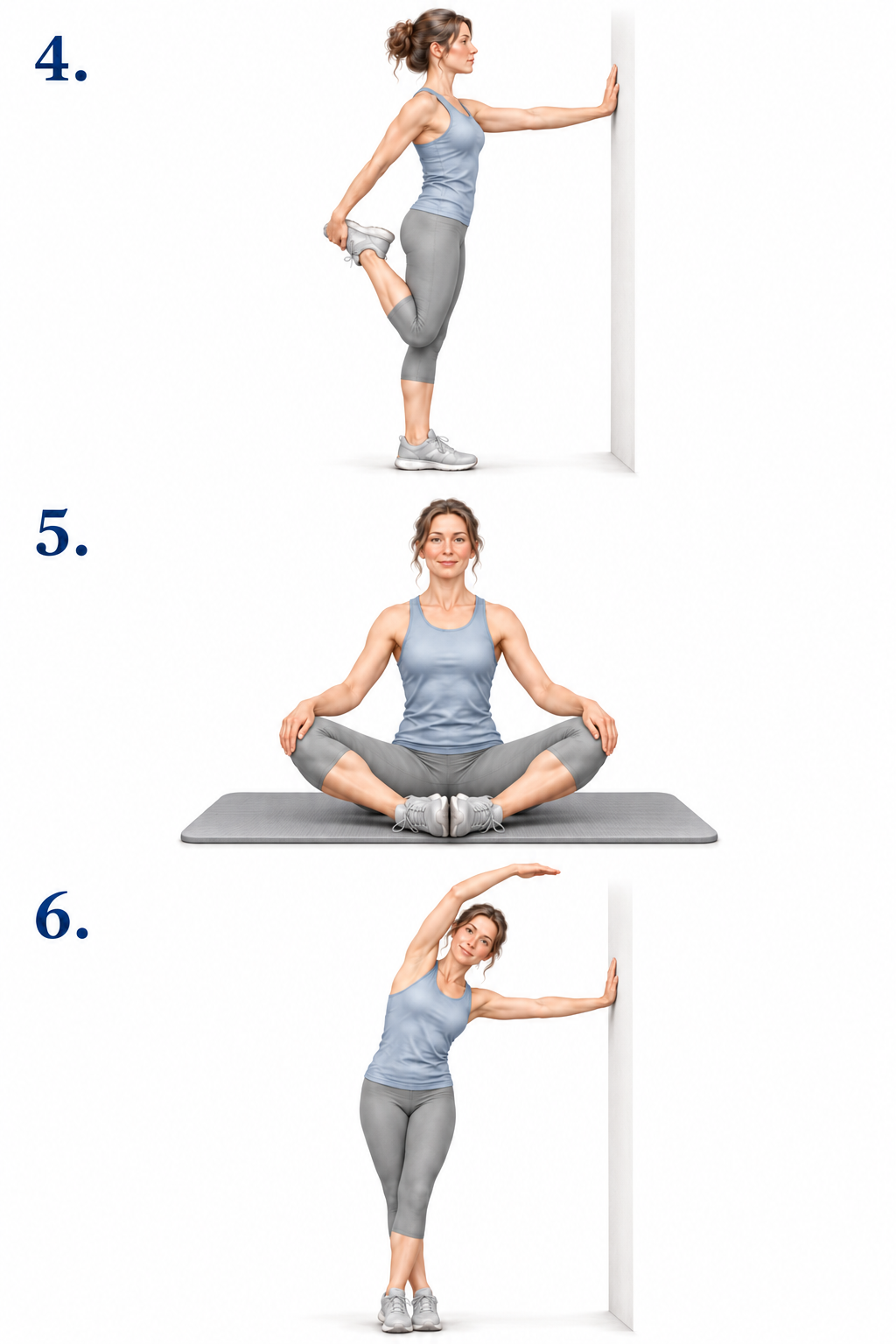
Supported standing stretches and a seated inner-thigh stretch.
Explore these stretchesDR POSTURE / A ROUTINE BY DR DAVID SHAHAR
Clear illustrations. Simple steps.
Room to move at your own pace.
Explore 18 stretches with the familiar Dr Posture exercise model and instructions beside each illustration. Browse one group or follow the sequence, adapting it to your ability.
Movement you can follow.STRETCHING FOR LIFE
Begin with a gentle 10-second hold. Change sides where applicable, then repeat once. A second stretch can be slightly deeper only if it remains comfortable. The illustration shows the movement, not a range you must reach.
CHOOSE YOUR STARTING POINT
The stretches progress from the legs and hips through to the neck.
Supported standing stretches and a seated inner-thigh stretch.
Explore these stretchesHip, lower-back and rotation movements using a stable seat.
Explore these stretchesStanding side and chest stretches, followed by shoulders, arms and inner forearms.
Explore these stretchesSmall, controlled movements for the forearms and neck.
Explore these stretchesBRING IT BACK TO YOUR DAY
Use a stretching break as a chance to notice your position and the task in front of you. Revisit a long reach, change position, or use a support. Keep strength, regular movement and recovery in the picture too.
Choose the full illustrated PDF or a one-page picture reference for your wall.
Get the printable PDFsRead the full routine onlineExplore the spinal exercise libraryThis routine includes 18 stretches with a 10-second starting hold. Instructions have been edited for clarity and comfortable-range guidance, and the illustrations redrawn in the Dr Posture exercise style. This is an author-review edition.
Hold times and suitable movements vary with the person and the purpose. The 10-second hold here belongs to this routine; it is not a universal prescription. These general guidance sources support gentle, controlled stretching and individual adaptation, rather than validating this complete sequence.