
EVERYDAY POSTURE / sleeping
Sleeping, with comfortable support.
Use pillows to help your body settle. Choose a position that suits you.
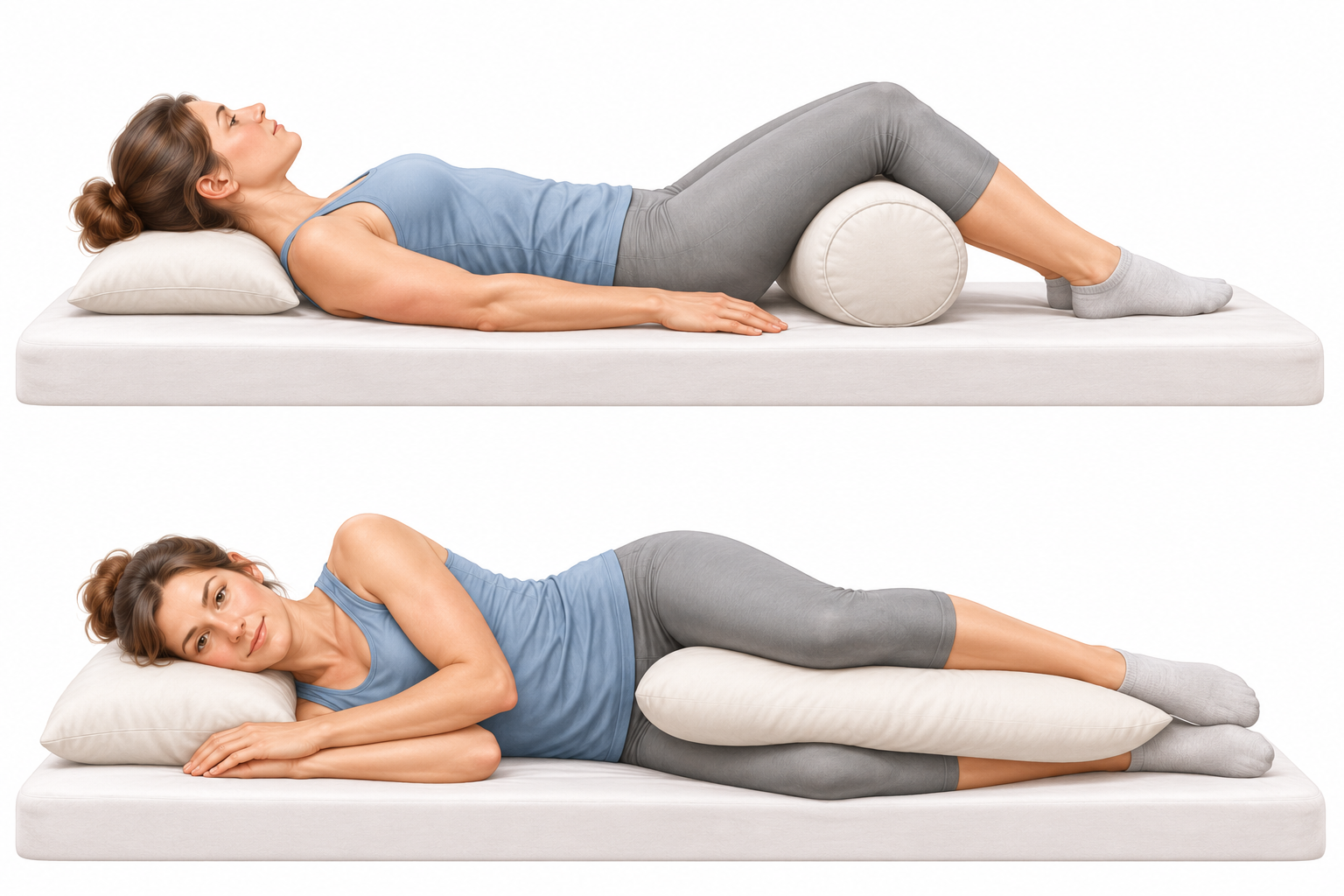
If you sleep on your back.
- Support your head and neck. Choose a pillow that keeps your head comfortably in line with your chest. A tall stack can tip your head forwards.
- Try a pillow under your knees. A small bolster or pillow can ease the pull on your lower back. Adjust its size for comfort rather than forcing a position.
If you sleep on your side.
- Fill the space beneath your head. Choose enough pillow height to support your head without tilting it sharply up or down.
- Support between your legs. Slightly bend your hips and knees. A pillow between the knees, or a longer body pillow, may help your hips and back settle comfortably.
There is no best position for everyone.
Back sleeping and side sleeping can both be comfortable. Change position naturally during the night. If stomach sleeping troubles your back or neck, try another position; individual advice can help if changing is difficult.
A pillow supports a position. It does not correct every spinal problem or prove that damage is being prevented.
Let health needs guide the choice.
- Sleep apnoea. Side sleeping may be recommended. Follow your treatment plan rather than choosing back sleeping just for posture.
- Pregnancy after 28 weeks. Go to sleep on your side, either left or right. If you wake on your back, turn back onto your side without worrying.
- Ongoing symptoms. If pain repeatedly interrupts sleep, or you develop numbness or weakness, seek clinical advice rather than buying progressively firmer or higher supports.
ONE PART OF EVERYDAY CARE
Support. Movement. Capacity.
Useful support changes the demand. Regular movement varies it. Appropriate exercise helps build what your body can do.
Explore the exercise library ↗Explore Stretching for Life ↗Adapted from Dr David Shahar’s original posture teaching, with updated guidance and newly created illustrations. Sources checked on 3 November 2026. © 2026 Dr Posture Pty Ltd and Dr David Shahar, DC, PhD.