
EVERYDAY POSTURE / standing
Standing, with room to move.
Look for a comfortable starting position you can change easily.
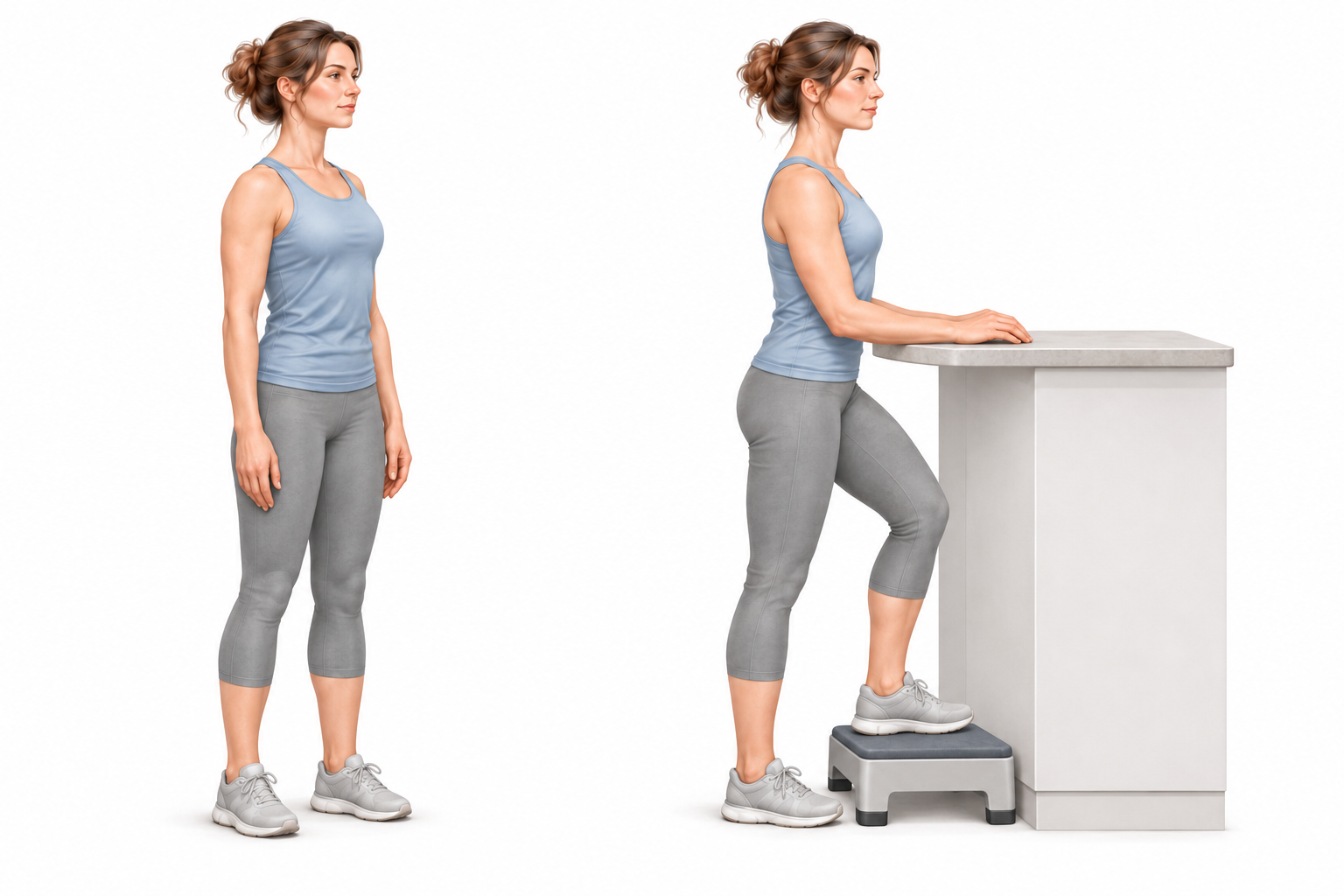
Begin with an easy stance.
- Feel supported by your feet. Stand with a comfortable space between them. Let your weight settle without deliberately locking your knees or forcing an exaggerated arch into your lower back.
- Let your head and chest settle comfortably. Look ahead when the task allows, with relaxed shoulders and easy breathing. You do not need to pull your shoulders hard back or hold your stomach tightly.
- Bring the work close. Position frequently used items so you can reach without leaning forwards for long periods. Adjust a standing desk to support relaxed arms.
Give standing some variety.
- Use a low, stable footrest. For a standing task, resting one foot on a broad support is an option. Swap feet when comfortable, keep your balance and keep the support out of walkways.
- Mix sitting, standing and walking. A sit–stand desk adds choice. It works best as a way to vary your day, rather than replacing long sitting with long motionless standing.
- Take the next natural movement break. Walk for a nearby task, change activity or sit when needed. The most useful setup makes these changes easy.
Safe Work Australia · Sitting and standing ↗ · WorkSafe Queensland · Staying active at your computer ↗
Where does the Manubrium Lift fit?
Dr Shahar uses one point of attention—the upper breastbone—to help organise a more upright position. If you have learned the cue, renew it gently during a familiar standing task. Keep breathing and moving normally.
A comfortable stance changes the demand on your body. It does not reveal tissue health or guarantee freedom from pain.
Read about the cue ↗ONE PART OF EVERYDAY CARE
Support. Movement. Capacity.
Useful support changes the demand. Regular movement varies it. Appropriate exercise helps build what your body can do.
Explore the exercise library ↗Explore Stretching for Life ↗Adapted from Dr David Shahar’s original posture teaching, with updated guidance and newly created illustrations. Sources checked on 3 November 2026. © 2026 Dr Posture Pty Ltd and Dr David Shahar, DC, PhD.